





Stevia vs Miracle Berry: Key Differences Explained
Stevia vs Miracle Berry: Key Differences Explained
Stevia and miracle berries both show up in the “natural sugar alternative” conversation. But they do completely different jobs.
Stevia adds sweetness directly to food and drinks. Miracle berries do not add sweetness like sugar or a sweetener. They temporarily change how your tongue experiences sour and tart foods.
That difference matters because it changes everything: taste, aftertaste, how you use them, where they work best and which one actually fits your lifestyle.
So when comparing stevia vs miracle berry, the real question is not just which one is better. It is whether you want to add sweetness, change how you taste it or make your current sweetener experience better.
Quick answer: Stevia is a sweetener. Miracle berries are a taste modifier. Stevia adds sweetness to foods and drinks while miracle berries make sour foods taste sweet without adding sugar or artificial sweeteners.
How Stevia and Miracle Berries Work
How miracle berries create a flavor transformation
Miracle berries contain miraculin, a naturally occurring protein found in the fruit Synsepalum dulcificum.
Miraculin interacts with sweet taste receptors on your tongue. At a neutral pH, the effect mostly waits quietly. But when you eat something acidic like lemon, lime, grapefruit, tart yogurt or cranberry juice, the acidic environment activates the effect. Your brain starts reading sour as sweet.
That is why a lemon can suddenly taste like lemonade. The lemon did not change. Your taste buds are just having a very strange little software update.
How stevia adds sweetness directly
Stevia works differently. Its active compounds, called steviol glycosides, directly activate sweet taste receptors. That creates sweetness without needing an acidic food trigger.
In simple terms: stevia sweetens what you add it to. Miracle berries transform how certain foods taste.
That one difference explains most of the comparison.
For a closer look at the berry side of this comparison, see our guide to how miracle berries work.
Stevia vs Miracle Berry: Side-by-Side Comparison
| Category | Stevia | Miracle Berry |
|---|---|---|
| How it works | Adds sweetness directly through steviol glycosides. | Uses miraculin to make acidic foods taste sweet. |
| Best use | Coffee, tea, baking, sauces and recipes that need added sweetness. | Fresh fruit, tart yogurt, salads, apple cider vinegar, green juice and pickled foods. |
| Aftertaste | Some people notice a bitter or licorice-like aftertaste. | No typical sweetener aftertaste because it does not add a sweetener. |
| Recipe use | Works in many hot drinks and recipes, though it does not replace sugar’s bulk or browning. | Not for baking or cooking because heat can break down miraculin. |
| Experience | Functional sugar swap. | Flavor transformation and food discovery. |
Taste and Aftertaste
What miracle berries taste like
Miracle berries do not taste overly sweet on their own. The experience happens after you chew the berry, coat your tongue and then taste something sour or tart.
Lemon can taste like lemonade. Tart yogurt can taste closer to dessert. Sour fruit can taste sweeter and more intense. Apple cider vinegar drinks can become smoother and more drinkable.
The best part for many people is that there is no typical sweetener aftertaste. You are not tasting a sugar substitute. You are tasting the original food differently.
What stevia tastes like
Stevia delivers strong sweetness quickly, which is why many people use it in coffee, tea, protein shakes and low-sugar recipes.
The tradeoff is that some people notice a bitter, herbal or licorice-like aftertaste. Not everyone minds it. Some people barely notice it. But if you are sensitive to sweetener aftertaste, stevia can be a little loud in the room.
The simple taste difference: stevia makes food sweeter. Miracle berries make sour foods taste sweet.
Which Is Better for Reducing Sugar?
Both can help people reduce sugar, but they do it in different ways.
Stevia is useful when you want a direct replacement for sweetness. If you usually add sugar to coffee or tea, stevia can step in as a sweetener without adding table sugar.
Miracle berries are useful when you want to enjoy naturally sour, lower-sugar foods without adding any sweetener at all. Instead of sweetening tart yogurt with honey or syrup, you can use a miracle berry and let the yogurt’s tartness become part of the sweetness experience.
That makes Nature’s Wild Berry especially interesting for people who want to make lower-sugar choices feel fun instead of forced.
Where Miracle Berries Shine
Miracle berries are best when the food or drink has some tartness, sourness or acidity. If it makes your mouth pucker, it is probably a strong candidate.
Fresh fruit
Tart fruit like grapefruit, berries, kiwi, green apple and citrus can taste sweeter and more dessert-like.
Tart yogurt
Plain Greek yogurt or other tart yogurts can taste smoother and sweeter without adding honey, syrup or sweetener.
Salads
Salads with lemon, lime, vinegar or tart dressings can taste brighter, more balanced and naturally sweeter.
Apple cider vinegar
Apple cider vinegar drinks can become smoother and easier to enjoy without adding sugar.
Green juice
Green juices with lemon, ginger, greens or other sharp flavors can taste more rounded and less intense.
Pickled foods
Pickles, pickled onions and other vinegar-forward foods can taste less sharp and more surprisingly snackable.
Where Stevia Has the Advantage
Stevia wins when you need a functional sweetener that can be added directly to a recipe or drink.
It works in hot coffee, hot tea, sauces, smoothies and many low-sugar recipes. It is also easy to measure, portable and widely available.
The catch is that stevia sweetens. It does not transform the food itself. If you are trying to move away from the habit of adding sweetener to everything, stevia may keep that pattern alive. That is not automatically bad. It just depends on your goal.
Can Miracle Berry and Stevia Work Together?
Surprisingly, yes. This is where the comparison gets more interesting.
One of the most common complaints about stevia is its aftertaste. Some people notice a bitter, herbal or licorice-like finish, especially in products that use a stronger dose.
Because miracle berries can change how the tongue experiences certain sharp, sour and bitter notes, some people may find that Nature’s Wild Berry helps soften the off-putting edge of stevia. That means the two do not have to be enemies. They can sometimes work as a team.
For example, someone who likes the convenience of stevia-sweetened products but dislikes the aftertaste could try Nature’s Wild Berry before enjoying something already sweetened with stevia, like flavored water, energy drinks, iced tea, ice cream or baked goods.
The key is not to oversell it. Miracle berries are not guaranteed to erase stevia aftertaste for every person or every product. Taste is personal and stevia formulas vary a lot. But as a flavor experiment, the combination makes sense. Nature’s Wild Berry may help make some stevia-sweetened products taste smoother, more enjoyable and less bitter.
Helpful takeaway: Miracle berries can deliver sweetness from acidic foods and drinks on their own. They may also help improve the taste of some stevia-sweetened products by softening the bitter or off-putting aftertaste some people notice.
Can You Bake With Miracle Berries?
No. Miracle berries are not a good fit for baking or cooking.
Miraculin is a protein and heat can break it down. That means using miracle berries in hot recipes or baked goods can destroy the taste-modifying effect before it ever reaches your tongue.
Stevia is the more practical option for baking or hot drinks. Just remember that stevia does not behave exactly like sugar in recipes. Sugar adds bulk, browning and moisture. Stevia mainly adds sweetness.
If you need a sugar substitute for baking, stevia is usually the more practical tool. If you want sour foods to taste sweet without adding sweetener, miracle berries are the more interesting tool.
Why Nature’s Wild Berry Is Different
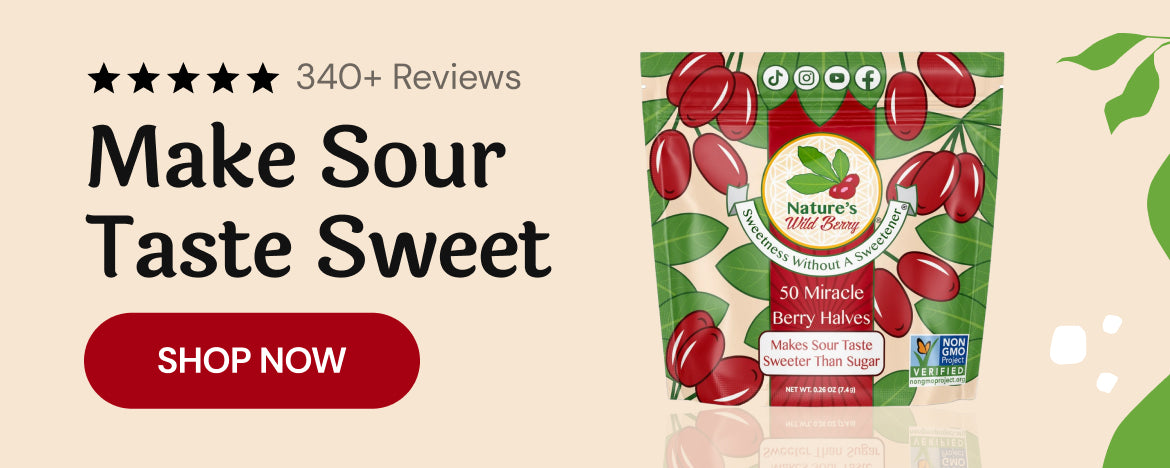
Nature’s Wild Berry uses real freeze-dried miracle berries. Not tablets. Not a syrup. Not a sweetener packet or any other additive.
Our freeze-dried berries are designed to deliver the real miracle berry experience: chew one up and let it coat your entire tongue for 30 seconds, then try sour foods and drinks to experience the flavor transformation.
Stevia
- Direct sweetener
- Works in hot drinks and many recipes
- Can have an aftertaste for some people
- Useful for coffee, tea, baking and sauces
- Still adds a sweetening ingredient
Nature’s Wild Berry
- Real freeze-dried miracle berries
- No added sugar
- No artificial sweeteners
- Certified Non-UPF
- Makes sour foods taste sweet without adding sweetener
Nature’s Wild Berry is also Non-GMO Project Verified and packed in the USA. It contains no added sugar and has negligible calories per serving.
How to Decide Which One Fits Your Lifestyle
The easiest way to choose is to ask what job you want done.
Choose stevia if you want to sweeten coffee, tea, baked goods or recipes. It is practical, direct and easy to use.
Choose miracle berries if you want sour foods to taste sweet without adding sweetener. They are ideal for fresh fruit, tart yogurt, salads, apple cider vinegar, green juice and pickled foods.
Choose stevia if you need heat stability. Miracle berries do not work well in cooking or baking because heat can break down miraculin.
Choose Nature’s Wild Berry if you want the experience of sweetness without the typical sweetener aftertaste. It is more of a flavor adventure than a pantry swap.
Try both together if you like stevia-sweetened products but dislike the aftertaste. Nature’s Wild Berry may help soften bitter or off-putting stevia notes for some people.
Safety and Who Should Use Caution
Stevia is generally well tolerated by many people, though some blended stevia products may contain sugar alcohols that can cause digestive discomfort for certain users.
Miracle berries are a food and are generally used as a taste-modifying experience. Some people may experience mild digestive discomfort, especially if they use miracle berries and then eat a lot of acidic foods.
If you have diabetes, prediabetes, blood pressure concerns, are pregnant, are nursing or take prescription medication, check with a qualified healthcare professional before making either option a regular part of your routine.
Nature’s Wild Berry is not intended to diagnose, treat, cure or prevent any disease. If you have a health condition or take medication, ask a qualified healthcare professional before changing your routine.
The Bottom Line
Stevia sweetens directly. Miracle berries transform.
Both can be useful for people trying to reduce sugar, but they are not interchangeable. Stevia is better when you need a direct sweetener for coffee, tea, baking or recipes. Miracle berries are better when you want fresh fruit, tart yogurt, salads, apple cider vinegar, green juice and pickled foods to taste sweeter or more balanced without adding sugar.
And in some cases, they may even work together. If you like stevia-sweetened products but dislike the aftertaste, Nature’s Wild Berry may help soften that bitter edge and make those products more enjoyable.
So when comparing miracle berry vs stevia, start with the real question: do you want to add sweetness, change how you taste it or make your current sweetener experience better?
If you are curious about the miracle berry side of this comparison, Nature’s Wild Berry is the fun place to start. Chew one berry, coat your tongue for 30 seconds, taste something tart and then see what happens.
No written comparison fully captures that first “wait, what?” moment. Your taste buds kind of need to see the evidence for themselves.
Frequently Asked Questions
Is miracle berry the same as stevia?
No. Stevia is a sweetener that directly adds sweetness to food and drinks. Miracle berries are a taste modifier that make sour and tart foods taste sweet for a short period of time.
Which tastes better, stevia or miracle berry?
It depends on the use case. Stevia gives direct sweetness but some people notice an aftertaste. Miracle berries do not add sweetener and can make acidic foods taste naturally sweet without the typical sweetener aftertaste.
Can miracle berries replace stevia?
Not in every situation. Miracle berries are not a one-to-one replacement for stevia in recipes, baking or hot drinks. They work best with acidic foods and drinks. Some people may also use miracle berries before stevia-sweetened products to help soften the bitter or off-putting aftertaste they notice from certain stevia products.
Can you bake with miracle berries?
No. Miracle berries are not a good fit for baking because heat can break down miraculin, the protein responsible for the taste-changing effect.
Which is better for reducing sugar?
Stevia can help replace sugar as a direct sweetener. Miracle berries may help people enjoy naturally sour, lower-sugar foods without adding sweetener. The better option depends on whether you want to sweeten food, transform how it tastes or improve the way your sweetener tastes.
Can miracle berries help with stevia aftertaste?
Some people may find that miracle berries help soften stevia’s bitter or off-putting aftertaste, especially before consuming products already sweetened with stevia. Results vary by person and by stevia product.
How do you use Nature’s Wild Berry?
Chew one freeze-dried berry and let the pulp coat your entire tongue for about 30 seconds. Then try sour or tart foods like fresh fruit, tart yogurt, apple cider vinegar, green juice or pickled foods.
Ready to Taste the Difference?
Try real freeze-dried miracle berries from Nature’s Wild Berry and make sour foods taste sweet without added sugar or artificial sweeteners.
Shop Nature’s Wild Berry