


“I love the berry! I use it all the time, its a great way to cut out sugar and still enjoy sweets.”
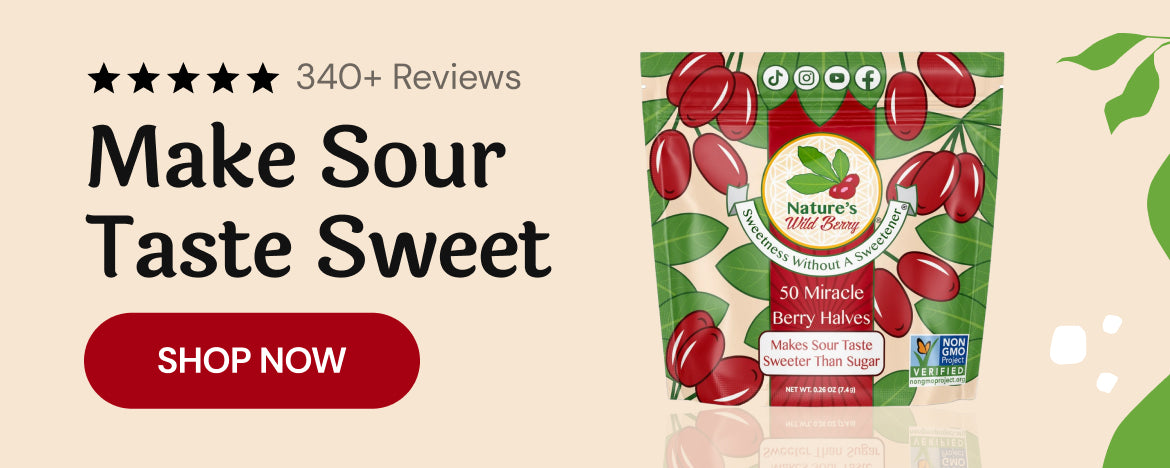
Miracle berries contain miraculin, a naturally occurring glycoprotein studied for its ability to temporarily change the way sour foods taste. Research shows that miraculin interacts with human sweet taste receptors and becomes active under acidic conditions, making foods like lemon, yogurt and vinegar-based foods taste sweeter for a limited period of time.
Below are selected scientific articles, reviews and clinical research links for anyone who wants to go deeper. Tiny berry, big rabbit hole.
The flavor-changing effect of miracle berries is temporary. Scientific literature reports that miraculin can begin working shortly after consumption and may last up to about 1 to 2 hours, depending on the source, the person and the acidic foods or drinks consumed during the experience.
A recent open-access review summarizing current evidence on miracle fruit, miraculin and taste modification. This is a great starting point for understanding how the berry changes taste perception in acidic foods and beverages.
Read the reviewA classic Nature paper on miraculin and the sweetness-inducing effect of miracle fruit. This paper notes that the taste-modifying effect usually lasts for 1 to 2 hours.
Read the Nature paperA foundational Science paper identifying the active principle of miracle fruit as a glycoprotein that modifies taste so sour substances are perceived as sweet.
View on PubMedThis PNAS paper explains the molecular mechanism behind the effect. Miraculin interacts with the human sweet taste receptor and activates sweetness under acidic conditions.
Read the full articleThis Scientific Reports paper goes deeper into the acid-triggered mechanism and supports the idea that miraculin is activated by acidic conditions rather than acting like ordinary sugar.
Read the Scientific Reports paperA biochemical characterization paper focused on isolating and describing miraculin, the taste-modifying protein found in miracle fruit.
Read the Journal of Biological Chemistry articleA consumer sensory study that looked at how people responded to sour foods before and after using miracle fruit. The foods studied included apple, goat cheese, lemonade, yogurt and pickle.
Read the full articleA clinical research article studying a miraculin-containing food supplement in malnourished cancer patients with taste disorders during treatment. This research is included for educational purposes only and should not be read as a claim that Nature's Wild Berry treats, prevents or cures any disease.
Read the full articleA registered clinical trial studying miraculin in patients experiencing taste dysfunction during radiation therapy. This link is included to show ongoing research interest in miraculin and taste perception.
View the clinical trial listingThese links are provided for educational and informational purposes only. Nature's Wild Berry is a food product and is not intended to diagnose, treat, cure or prevent any disease.

