





What Is a Miracle Berry and How Does It Work?
What Is a Miracle Berry and How Does It Work?
Bite into a lemon after eating a miracle berry. Suddenly, it unlocks a sweetness you’ve never tasted before with no sugar, no sweetener and nothing added. That’s the strange little magic of a miracle berry, except the science behind it is very real.
So what are miracle berries, exactly?
Miracle berries are small red fruits native to tropical West Africa. They contain a natural protein called miraculin that temporarily changes how your taste buds interpret sour and tart foods. After eating one, lemons can taste like lemonade, limes can taste like candy and plain Greek yogurt can suddenly taste like dessert.
The food itself does not change. Your taste perception does.
That is why the experience feels so surprising the first time. Your brain knows you are eating a lemon, but your mouth is telling you something completely different.
Today, Americans are discovering miracle berries at home thanks to Nature’s Wild Berry, the only Shark Tank-featured, USA-made miracle berry brand offering real freeze-dried miracle berries instead of tablets.
By the time you finish reading this, you’ll understand what miracle berries are, how miraculin works, how long the effect lasts and which foods create the most unforgettable flavor transformation.
What Are Miracle Berries and Where Do They Come From?
The botanical name for miracle berry is Synsepalum dulcificum. It grows naturally in tropical West Africa, where local communities have used the fruit for centuries before eating sour or fermented foods.
The berry itself is small, red and unassuming. It is roughly the size of a coffee bean and has a mild taste on its own. Nothing about it screams “this is about to make a lemon taste like candy.” That is part of the fun.
For a straightforward introduction to the berry and its uses, see our complete guide to what are miracle berries.
Why Scientists and Food Lovers Took Notice
European explorers documented the berry’s unusual properties as far back as the 18th century. The real scientific breakthrough came later, when researchers identified the active compound responsible for the effect: miraculin.
The simple science
Miraculin is a natural protein found in miracle berries. It binds to sweet taste receptors on your tongue. On its own, it does not taste intensely sweet. But when sour or acidic foods enter your mouth, miraculin changes how those acids are interpreted by your taste receptors.
The result is a temporary sweetness effect that can make sour foods taste dramatically sweeter without adding sugar, artificial sweeteners or additives.
That makes miracle berries especially interesting to food lovers, families, party hosts, science teachers, content creators and anyone who loves a “wait, what just happened?” food experience.
How Miracle Berries Work
Miracle berries work because of miraculin.
When you chew a miracle berry and move it around your tongue, miraculin coats your taste receptors. At a neutral pH, meaning when your mouth is not interacting with anything sour, not much happens.
Then you eat something acidic like lemon, lime, grapefruit, vinegar, kombucha or sour candy.
That acid changes how miraculin behaves on your tongue. It activates your sweet taste receptors, sending a sweetness signal to your brain even though the food itself has not become sweeter.
The lemon is still a lemon. The lime is still a lime. The vinegar is still vinegar. Miracle berries do not add sugar to the food. They do not remove acid from the food. They temporarily change how your tongue and brain interpret that sourness.
Think of miraculin like a temporary flavor filter. Sour goes in, sweet comes out.
Are Miracle Berries a Sweetener?
Not exactly.
Miracle berries are often compared to sweeteners because they make certain foods taste sweet, but they do not work like sugar, stevia, monk fruit or artificial sweeteners.
Sugar adds sweetness to food. Stevia and artificial sweeteners stimulate sweet taste receptors directly. Miracle berries are different because they only create the sweetness effect when you eat sour or acidic foods.
That is why miracle berries are best understood as a taste-modifying fruit, not a traditional sweetener.
They do not make everything sweet. They shine when paired with sour and tart foods.
How Long Do Miracle Berries Last?
For most people, the miracle berry effect lasts 15 to 20 minutes with one piece and 20 to 40 minutes with two. Some people may notice the effect for longer depending on how they use it, what they eat and how quickly the miraculin is washed away from the tongue.
The best way to use a miracle berry is simple:
Chew it thoroughly.
Move it around your tongue.
Let it coat as much of your tongue as possible.
Wait a moment before trying your first sour food.
That coating step matters. It gives miraculin time to bind to your taste receptors so the flavor transformation can kick in.
The effect fades naturally as saliva washes the miraculin away. There is no sudden off switch. Foods will gradually start tasting normal again.
Eating a large meal, drinking a lot of water or consuming dairy may shorten the effect because those things can rinse the miraculin off your tongue more quickly.
The Best Foods to Try With Miracle Berries
The best foods to try with miracle berries are sour, tart or acidic foods. The more sour the food, the more dramatic the transformation tends to be.
Here are some of the best first-timer foods to try:
Lemons and limes are the classic starting point because the contrast is so dramatic. Most people expect to pucker. Instead, they taste something closer to lemonade or citrus candy.
Plain Greek yogurt is another favorite because it can taste surprisingly close to cheesecake. Grapefruit becomes smoother and sweeter. Green apples taste more like candy apples. Vinegar-based foods can take on a fruity, almost tropical quality.
Pepper-based heat is different. Miracle berries work best with sourness and acidity, not capsaicin. So a vinegar-based hot sauce may transform in an interesting way, but a pepper-heavy sauce may still bring the heat.
Tiny fruit wizard. Very specific job description.
How to Build a Simple Flavor-Tripping Spread
A good miracle berry tasting setup does not need to be complicated. Start with a few sour foods that create obvious contrast.
A simple spread could include lemon slices, lime wedges, plain Greek yogurt, green apple slices, strawberries, grapefruit, sour candy, balsamic vinegar and a vinegar-based hot sauce.
Keep portions small so everyone can try multiple foods during the strongest part of the effect. The fun comes from the contrast between what people expect and what they actually taste.
For more ideas, tasting setups and recipes, visit our Miracle Berry Blog: Recipes, Guides & Science.
Freeze-Dried Miracle Berries vs. Miracle Berry Tablets
Format matters.
Miracle berry tablets
- Pressed from powder
- Often mixed with fillers and binders
- Need to dissolve slowly
- Can take up to 10x longer to work
- Can cost up to 4x more per serving
Real freeze-dried berries
- Real miracle berries
- No additives
- Dissolve quickly on your tongue
- Release miraculin directly
- Faster, cleaner and more natural tasting
Most widely available miracle berry products are pressed tablets made from powder mixed with fillers and binders. Those tablets usually need to dissolve slowly before the miraculin fully reaches your taste receptors. That slower format can take up to 10x longer to work than real freeze-dried berries and can cost up to 4x more per serving.
Nature’s Wild Berry is different.
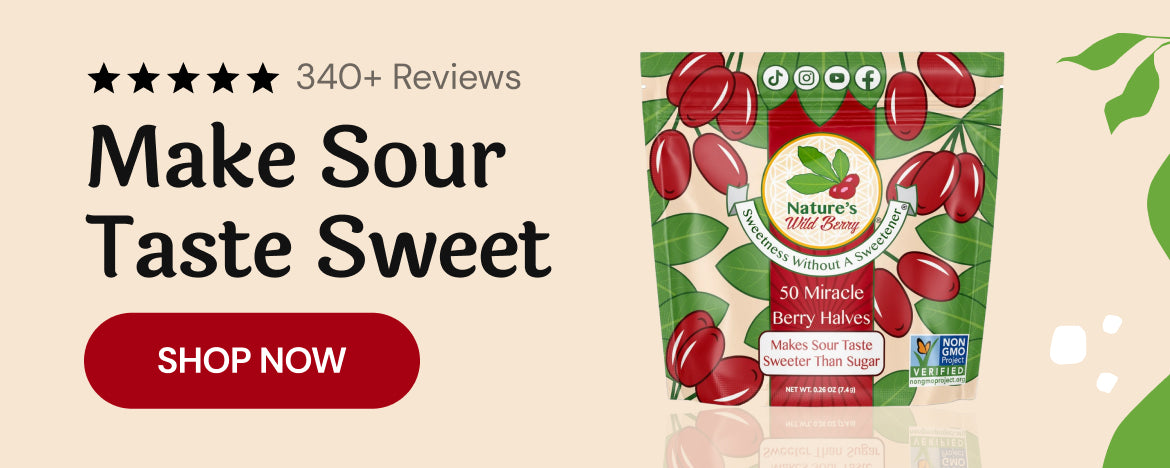
Nature’s Wild Berry offers real freeze-dried miracle berries, not tablets. The berry dissolves quickly on your tongue and releases miraculin directly. That means a faster, more natural tasting experience without waiting around for a tablet to slowly break down.
When you are hosting a tasting party, filming a reaction video or handing someone a lemon wedge for their first flavor trip, timing matters. Real freeze-dried berries help the experience happen faster.
No awkward “keep sucking on that tablet for five minutes” energy required.
Why Nature’s Wild Berry Is the Go-To Source for Real Miracle Berries
Nature’s Wild Berry is the only Shark Tank-featured, USA-made miracle berry brand selling real freeze-dried miracle berries rather than tablets.
Every batch uses a proprietary deseeding and slicing method designed to protect the berry from the moment of processing to the moment it touches your tongue. That matters because miraculin is the whole show. Protecting it helps create a better tasting experience.
Nature’s Wild Berry is Non-GMO Project Verified, calorie-free, sugar-free and made with no additives. The berries have a shelf life of up to 900 days, making them easy to keep on hand for parties, family tasting nights, food experiments or spontaneous “you have to try this” moments.
They are available in a convenient Travel Jar and a 50-serving refill bag, with free domestic shipping on qualifying orders and a 100% satisfaction guarantee.
More than 100,000 customers across the USA have already tried them and the reaction is usually the same: disbelief, laughter and immediately reaching for another lemon.
To learn more about the company’s founding story, read The Two Conditions That Paved The Way.
Are Miracle Berries Safe?
Miracle berries are a real fruit and they have been eaten for generations. Nature’s Wild Berry uses freeze-dried miracle berries with no additives, no sugar and no artificial sweeteners.
That said, miracle berries change how sour foods taste. They do not change the actual acidity of those foods. A lemon may taste sweet, but it is still acidic. If you are sensitive to acidic foods or have a medical condition that requires dietary caution, check with your healthcare provider before diving into a full lemon buffet.
Researchers have also studied miraculin in taste-related contexts, which is one reason the science behind miracle berries continues to attract attention.
For a clinician-oriented overview of miracle berries and their reported effects, the Cleveland Clinic offers a helpful summary.
What Do Miracle Berries Taste Like?
On their own, miracle berries have a mild fruity taste. The real flavor experience happens after you eat one.
That is when sour foods start tasting sweet.
A lemon may taste like lemonade. A lime may taste like candy. Plain yogurt may taste like cheesecake. Strawberries can taste more intense and ripe. Grapefruit becomes smoother and less bitter.
The effect is fun because it feels impossible at first. You know the food has not changed, but your taste buds are telling a different story.
That is why miracle berries are so popular for parties, family activities, science experiments and reaction videos. They are not just something you eat. They are something you experience.
Final Takeaway
Miracle berries are small red fruits from West Africa that contain miraculin, a natural protein that temporarily makes sour and tart foods taste sweet.
They do not add sugar. They do not use artificial sweeteners. They do not change the food itself. They change how your taste receptors interpret acidity.
That simple mechanism creates one of the most surprising food experiences you can have.
If you are curious enough to try it, Nature’s Wild Berry makes it easy with real freeze-dried miracle berries that work faster than tablets, cost less per serving and deliver the full “try it to believe it” effect.
No description can fully prepare you for the moment you bite into a lemon and taste sweetness you did not know was possible.
The only way to understand what miracle berries do is to taste one yourself.
Ready to Taste the Science?
Try real freeze-dried miracle berries from Nature’s Wild Berry and turn sour foods into a sweet, unforgettable flavor experience.
Shop Nature’s Wild BerryWhich Nature’s Wild Berry Product Should You Choose?
If you are buying miracle berries for yourself and expect to use about one serving a day, start with the Travel Jar. It is the easiest first purchase and keeps approximately 30 servings protected in a reusable tin.
If you plan to use miracle berries twice a day or are preparing a small taste-tripping party, choose the 50-Serving Refill Bag. It gives you more servings at a lower cost per serving and can refill your Travel Jar.
For regular use, larger groups or keeping extra berries on hand, choose the Travel Case or one of the multi-count 50-Serving promotions. If you prefer recurring delivery, Subscribe & Save makes each completed order less expensive until your best price is locked in from the eighth order. Subscribers receive free US shipping, first call on stock when supplies run short, and the flexibility to skip, swap, pause or cancel.