


“I love the berry! I use it all the time, its a great way to cut out sugar and still enjoy sweets.”
Last Updated: May 28, 2026
A Miracle Berry is a small red West African fruit that temporarily changes how your tongue experiences sour foods, making lemons, limes, vinegar, pomegranate, and other acidic foods taste sweet without adding sugar. Also called Miracle Fruit, Magic Berry, Magic Fruit, and Flavor Changing Berry, the fruit comes from Synsepalum dulcificum and works because of miraculin, a natural glycoprotein that coats your sweet taste receptors and activates when acid arrives. The food doesn't change. Your tongue does.
Most of what's on this page can be found scattered across the internet in pieces. Some of it can't be found anywhere else because it comes from years of working directly with Miracle Berries, watching people try them, testing how they perform, and learning what the research alone doesn't always show. After 14 years with this fruit and well over 100,000 taste tests across customers, classrooms, hospitals, expos, kitchens, and tasting tables, this is the complete answer to what Miracle Berries are, how they work, where they come from, and what they can actually do.
Prefer to watch first? Start with this short explainer, then use the guide below when you're ready to go deeper.
A Miracle Berry is a small red fruit from West Africa that temporarily changes the way your tongue experiences sour foods. After eating Miracle Berries, foods like lemons, limes, vinegar, grapefruit, pomegranate, and other acidic foods can taste sweet without adding sugar.
Miracle Berries are also called Miracle Fruit, Magic Berry, Magic Fruit, and Flavor Changing Berry. The scientific name is Synsepalum dulcificum, and the active compound inside the fruit is miraculin, a natural glycoprotein found in the pulp. [1]
Miracle Berries don't sweeten food the way sugar does. They coat the sweet taste receptors on your tongue, then activate when acid arrives. That means the lemon doesn't become sugary. The vinegar doesn't become candy. The food stays chemically the same, but your tongue reads the sourness differently.
The easiest way to understand it is this: Miracle Berries make sour taste sweet.
That's why the Miracle Berry feels so strange the first time someone tries it. Your brain knows a lemon should taste sharp, sour, and aggressive. Then you bite into it after the Miracle Berry and suddenly it tastes like sweet lemonade, lemon candy, or something royal a king would wish someone had brought to the table centuries ago.
The food didn't change.
You did.
Before the flavor changing effect begins, a Miracle Berry has a mild fruit taste. It isn't intensely sweet like a grape, mango, or strawberry. The flavor is gentle, slightly tart, slightly fruity, and easy to overlook if you're expecting the fruit itself to taste like the miracle.
The miracle isn't the berry tasting sweet.
The miracle is what happens after the berry coats your tongue.
There's also something fascinating that almost nobody explains: the Miracle Berry can start working on itself while you chew it. Miracle Berries naturally contain acidity, and miraculin thrives in an acidic pH environment. As you chew the pulp and move it around your tongue, the fruit's own acidity can begin interacting with the miraculin that's coating your taste receptors. That's why the berry may taste a little sweeter as you keep chewing.
It's a tiny preview of the main event.
You're not just eating the fruit. You're activating the system.
Most foods taste the way they taste because of what's inside the food. Sugar tastes sweet because sugar is sweet. Salt tastes salty because salt is salty. Lemon tastes sour because citric acid is sour.
Miracle Berries break that expectation.
They don't change the lemon. They change the reader. Your tongue becomes the translator, and for a little while, it starts translating sourness as sweetness.
This is why Miracle Berries create such strong reactions. People laugh. They freeze. They look suspiciously at the lemon like it just committed fraud. Then they try the lime, the vinegar, the grapefruit, the pickle, the hot sauce, the pomegranate, and suddenly the kitchen becomes a laboratory.
Miracle Berries turn ordinary food into a sensory experiment.
Most sweet products work by adding something.
Sugar adds sugar. Artificial sweeteners add sweetness. Syrups add flavor. Flavor drops add a new taste on top of the old one.
Miracle Berries are different. A Miracle Berry doesn't add sweetness to the food. It doesn't pour sugar into the lemon. It doesn't change the calories of a lime. It doesn't make vinegar less acidic.
It changes the way your tongue interprets what's already there.
That's why we think of the Miracle Berry as an Anti Additive. It doesn't force sweetness into food. It reveals sweetness through sourness.
For anyone trying to enjoy tart fruit, fermented foods, acidic drinks, vinegar based dressings, unsweetened beverages, or lower sugar eating, that difference matters. Miracle Berries aren't another way to hide food under sweetness. They're a way to experience sharp, sour, and acidic foods differently.
The real magic isn't that Miracle Berries make lemons taste sweet.
The real magic is that the lemon is still a lemon.
Miracle Berries work because of miraculin, a taste modifying glycoprotein in the fruit's pulp. Miraculin coats sweet taste receptors on the tongue. When acid enters the mouth, those receptors respond as if sweetness is present, even though no sugar has been added to the food. [2]
Your tongue has receptors that help detect sweet taste. Miraculin attaches to those receptors, but it doesn't create a strong sweet taste by itself. The effect begins when something acidic arrives.
That acid changes the environment around the receptor. Under those acidic conditions, miraculin helps activate the sweet taste pathway, so sour foods taste sweet. [3] In plain English: miraculin waits on your tongue until acid shows up. Then the switch flips.
The main sweet taste receptor involved is known as hT1R2 hT1R3. That sounds like a robot part, but it's simply the name for the human sweet taste receptor complex. It helps your body recognize sweetness from things like sugar and some sweeteners.
Miraculin interacts with that receptor in a very unusual way. At a neutral pH, meaning when your mouth isn't especially acidic, miraculin can sit on the receptor without producing a strong sweet taste. When the pH drops because you eat something sour, the behavior changes. The receptor begins signaling sweetness.
[3] That pH dependence is the key.
Without acid, miraculin is mostly waiting.
With acid, miraculin becomes the trick.
Acid isn't just a flavor in this process. Acid is the trigger.
This is why Miracle Berries work beautifully with lemons, limes, grapefruit, vinegar, pomegranate, strawberries, kiwi, sour apples, kombucha, vinaigrettes, pickled foods, and other acidic foods. These foods bring the low pH environment that miraculin needs.
It's also why Miracle Berries don't make every food sweet. A cracker doesn't become cake. Plain rice doesn't become rice pudding. A salty chip doesn't suddenly taste like candy.
Miracle Berries aren't a universal sweetness button.
They're an acid activated taste modifier.
Current research points toward a larger acid dependent mechanism rather than one tiny part of miraculin doing all the work alone. In acidic conditions, the sweet taste receptor and miraculin appear to behave differently together, with acid helping drive the conformational change and receptor interaction that produces sweetness signaling. [3] [4] Histidine residues may be part of that acid sensitive behavior, but they're not the whole story. The useful way to think about it is that miraculin changes how it interacts with the sweet receptor when the mouth becomes acidic.
That doesn't mean you need a chemistry degree to understand the fruit.
It means miraculin is built in a way that lets acidity change how it behaves. At one pH, it sits quietly. At another pH, it helps turn sour into sweet.
That's why the Miracle Berry isn't just a fun fruit. It's a beautifully strange biological machine.
One of the biggest mistakes people make is assuming more Miracle Berry always means more sweetness.
It doesn't.
Once enough miraculin has coated the available sweet receptors, more berry stops adding much to the effect. Your tongue doesn't have an infinite number of landing spots. Once those receptor sites are occupied, extra miraculin has nowhere useful to go.
Think of the receptors like tiny Venus flytrap mouths. Once the mouths are full, throwing more food at them doesn't create more mouths.
Over the years, I've watched people try to stack Miracle Berries because they assume more equals stronger.
Usually, that just wastes berries. Good technique matters more than brute force.
Use enough Miracle Berry to coat the tongue well. Move it around. Give it time. Then let the sour food do the rest.
Most explanations skip this, but the Miracle Berry effect doesn't always peak instantly.
After the pulp coats your tongue, the sweetness can keep building for about the first minute. For many people, the effect feels closer to full strength around one minute to one minute and twenty seconds after the Miracle Berry has fully coated the tongue.
That timing matters.
If someone dissolves a tablet or chews a freeze-dried berry and bites into a lemon ten seconds later, they may still get an effect. But they may not get the best effect.
A better method is simple:
That small pause can be the difference between “that's interesting” and “what did this fruit just do to my reality?”
For most people, the Miracle Berry effect lasts about fifteen to thirty minutes. That's the normal window and the safest expectation to give someone trying Miracle Berries for the first time.
But not everyone experiences taste the same way.
Some strong tasters can feel the effect for much longer, sometimes for several hours. When I first started working with Miracle Berries, the effect lasted close to five hours for me. That's not the usual experience, and it shouldn't be promised to customers, but it's real. Taste receptor sensitivity varies from person to person, which is part of what makes this fruit so fascinating.
The honest answer is this: most people get fifteen to thirty minutes, some people get less, and some unusually sensitive tasters can get much more.
Miraculin needs direct contact with the tongue. That's why technique can make or break the experience.
If you swallow too quickly, the effect may be weaker. If your tongue is coated with food, oil, cream, or residue, the effect may be uneven. If you blend Miracle Berry powder into a smoothie, much of the miraculin may never properly coat the receptors. If you bake or cook with it, heat can damage the protein.
The best method is boring because it works:
The standard way to measure miraculin is a chemical assay. That sounds objective, and in many ways it's useful. But in our own testing, we learned that chemical numbers alone don't always tell the whole story.
We ran multiple preservation tests across raw frozen berries, dehydrated berries, freeze-dried whole berries, freeze-dried berries with holes poked into them, and freeze-dried berries that were sliced and de-seeded before drying.
Some results didn't match real world performance.
Berries that were clearly degraded could still assay high. Berries that performed beautifully in the mouth could assay lower than expected. The lab number wasn't useless, but it was incomplete.
That forced us to care about something more important than a clean looking number: does the Miracle Berry actually work when a human being uses it?
So we moved the testing program toward sensory testing with a trained taste panel, using citric acid as the base. That allowed us to test the real world experience: how strongly the sourness changed, how sweet it tasted, how long the effect lasted, and which preparation methods actually preserved the function people care about.
That distinction matters because Miracle Berries aren't sold to impress a spreadsheet.
They're sold to work on a tongue.
Miracle Berries work because miraculin coats your tongue and waits for acid.
When acid arrives, your sweet taste receptors respond differently.
That's why sour turns sweet.
That's why technique matters.
That's why heat, moisture, time, and poor storage can weaken the effect.
And that's why the best Miracle Berry isn't just the berry that looks good.
It's the one that still has enough living function left in the protein to do what nature designed it to do.
Miracle Berries aren't sweeteners in the normal sense. They don't add sugar, calories, syrup, flavor drops, or artificial sweetness to food. Miracle Berries temporarily change how your tongue experiences sourness.
That's the cleanest way to understand the difference.
Sugar changes the food.
Artificial sweeteners change the food.
Miracle Berries change the experience of the food.
Miracle Berries make sour foods taste sweet, but they aren't sweeteners the way sugar or stevia are sweeteners. The active protein, miraculin, doesn't make food sweet by dissolving into it. It coats your tongue first, then works when acid arrives.
That means a lemon can taste sweet after Miracle Berries, but the lemon still contains the same acid and the same sugar it had before.
Miraculin modifies the eater, not the food.
That one sentence matters because it separates Miracle Berries from almost everything else in the sweetener world.
You'll see it everywhere online: miraculin is 10,000 times sweeter than sugar, or 50,000 times, or some even larger figure. These numbers aren't pulled from thin air. They come from a narrow laboratory calculation that compares sweetness on a molar basis, molecule for molecule. But that calculation has almost nothing to do with how the fruit behaves on your tongue, and repeating it gives people completely the wrong idea.
Miraculin doesn't taste powerfully sweet by itself. If you eat a Miracle Berry and then eat nothing acidic, you get no rush of sugar flavor at all. The protein is just waiting for acid. It needs sourness to show what it can do.
Asking how many times sweeter than sugar miraculin is is a little like asking how loud a light switch is. The switch isn't the sound. The switch controls what happens when the system turns on. Miraculin is the switch.
Acid turns it on.
So the useful question isn't how many times sweeter miraculin is than sugar. The useful question is what happens when miraculin is on your tongue and acid arrives.
The careful answer is that, under certain conditions, a mildly sour solution can taste as sweet as a strong sugar solution. That doesn't mean every lemon, lime, vinegar, or sour food becomes the same sweetness for every person. It means the effect can be strong enough that sourness is experienced as real sweetness, not as a weak imitation of sweetness.
A lemon after Miracle Berries doesn't taste like diet lemonade.
It can taste like real lemonade.
Grapefruit can taste like it's been sugared.
Pomegranate can become almost unfair.
Apple cider vinegar in water can taste closer to cider than punishment.
This part is important for people watching sugar intake, managing calories, experimenting with keto, or trying to understand what's actually happening.
Miracle Berries don't remove acid from food. They don't lower the sugar content. They don't add carbohydrates. They don't change the chemistry of the lemon, lime, vinegar, grapefruit, cranberry juice, or hot sauce.
The change happens in taste perception.
That's why a lemon can taste sweet but still be acidic. It's also why someone with reflux, sensitive teeth, or a medical condition should still think about the food itself, not only how sweet it tastes.
A sour food that tastes sweet after Miracle Berries is still sour food.
Your tongue is just reading it through a different lens.
Most sweeteners are judged by how close they come to sugar.
Do they taste like sugar?
Do they leave an aftertaste?
Do they spike blood sugar?
Do they cause digestive issues?
Do they work in drinks?
Do they bake well?
Miracle Berries belong in a different category.
They aren't trying to imitate sugar. They aren't trying to make a cookie taste sweeter. They aren't trying to hide poor flavor under artificial sweetness.
They help people experience sour, tart, fermented, acidic, and vinegar based foods in a completely different way.
That makes Miracle Berries less like a sweetener and more like a kitchen key.
They unlock a door that was already there.
Miracle Berries are not medicine. They do not treat, cure, prevent, or reduce disease. What they may do for some people is much narrower and much more believable: they may help certain foods, drinks, or medicines taste better.
That difference matters.
The safest way to discuss Miracle Berries in health and medicine is through taste support, food enjoyment, quality of life, and dietary adherence. People with medical conditions, people on medication, or anyone caring for a child should ask a clinician first.
Some people receiving chemotherapy experience taste changes that make food taste metallic, bitter, dull, rotten, or strangely unpleasant. For those people, eating can become another battle at the exact moment when strength, comfort, calories, and dignity matter most.
For people with normal taste buds, Miracle Berries make sour taste sweet.
For chemotherapy patients whose taste is changed by treatment, Miracle Berries may do something different. They may help food that tastes like metal taste normal again.
That is a very different claim from saying Miracle Berries treat cancer. They do not. Miracle Berries are not a cancer treatment. They are not chemotherapy. They are not a drug. They are not a cure.
The potential value is taste support.
If food tastes unbearable, people may eat less. If food becomes more enjoyable, some people may be more willing to eat. That's quality of life territory, not disease treatment territory.
Clinical research has explored miraculin and Miracle Fruit for chemotherapy related taste changes, including pilot work looking at whether Miracle Fruit may help improve taste perception and food enjoyment in cancer patients. That research should be read carefully. It supports the idea that miraculin may have a role in taste support for some people, not that Miracle Berries treat the disease itself. [5] That distinction isn't legal decoration. It's truth.
When someone is already in a fragile state, every negative gets louder.
A normal inconvenience becomes exhausting.
A bad meal becomes demoralizing.
A metallic taste in the mouth can make food feel like an enemy.
That's why taste support matters. Food isn't just nutrition. Food is comfort, ritual, memory, family, normalcy, and control. When treatment changes taste, it can take away one of the few daily pleasures someone still has.
If Miracle Berries help a person enjoy lemon water, fruit, yogurt, a smoothie, a salad dressing, or a simple meal again, that can matter.
Not because Miracle Berries are medicine.
Because eating matters.
Miracle Berries do not treat diabetes. They do not replace medication. They do not lower blood sugar by magic. They should never be presented as a diabetes cure.
What Miracle Berries may help with is taste.
Many foods that fit well into a lower sugar lifestyle are naturally tart, acidic, fermented, or unsweetened.
Think lemon water, plain Greek yogurt, vinegar based dressings, berries, grapefruit, unsweetened cranberry, kombucha, pickled vegetables, and other sharp foods that some people avoid because they taste too sour.
Miracle Berries can make some of those foods taste sweeter without adding sugar.
That doesn't mean every food becomes appropriate for every person. People managing diabetes still need to think about carbohydrates, total diet, medication, glucose response, and their clinician’s guidance.
But from a practical food perspective, Miracle Berries can be useful because they make certain lower sugar foods more enjoyable.
Miracle Berries don't burn fat. They don't physically stimulate metabolism. They don't block calories. They don't make weight loss happen by themselves.
What they can do is help some people enjoy foods they already know they should probably eat more often.
That sounds less dramatic, but it's much more useful.
A salad that tastes boring may get ignored. A sour dressing may feel too sharp. Plain yogurt may taste punishing. Lemon water may feel like a chore. Tart fruit may sit in the fridge until it goes bad.
After Miracle Berries, those foods can become exciting.
That matters because better eating is often not a knowledge problem. Most people know a salad is probably better than a bag of candy. The problem is desire. The problem is friction. The problem is that the food that helps you doesn't always feel like the food you want.
Miracle Berries can lower that friction.
One of the strongest examples inside our own company is weight loss. Nature’s Wild Berry was built around real people using this fruit in real life, not just around a lab definition of miraculin. A co founder used Miracle Berries as part of a larger lifestyle shift and lost about 80 pounds, with a salad a day becoming one of the key rituals.
That doesn't mean Miracle Berries cause 80 pounds of weight loss.
It means Miracle Berries can make healthy food easier to want.
That's the honest miracle.
One of the early moments that made this fruit feel bigger than a novelty involved a family member who wanted almost nothing healthy. The safe food was quesadillas. That was the comfort zone. Vegetables were not the dream.
Then Miracle Berries came into the picture.
After using the fruit, that same person ate a full salad. Not because anyone gave a lecture. Not because someone forced a health speech. Because the food suddenly tasted good enough to choose.
That kind of moment changes how you see the fruit.
You stop thinking, “This is a funny trick with lemons.”
You start thinking, “This could help people change their relationship with food.”
That's a much bigger idea.
Miracle Berries can be useful for some people eating keto or low carb because many keto friendly foods are already sour, tart, fermented, or acidic.
Miracle Berries don't make a food keto. They don't erase carbohydrates. They don't change nutrition labels.
They simply make some low sugar foods taste sweeter and more enjoyable.
That can be useful when someone wants flavor without adding sugar.
Some medicines taste terrible. Some are bitter. Some are sour. Some taste metallic. Some are so unpleasant that taking them becomes a daily fight.
Miracle Berries may help in certain cases because they can change the taste experience of sour or acidic flavors. They aren't guaranteed to fix every medicine, and they shouldn't be mixed into medication unless a clinician or pharmacist says that's appropriate.
The safer approach is usually to use Miracle Berries first, let the tongue coat, then take the medicine as directed.
Always ask a clinician or pharmacist before using Miracle Berries with medication, especially for children, people with medical conditions, or anyone taking important prescription medicine.
Many of us who work with Miracle Berries have moments that remind us why this fruit matters. A few personal ones, with identifying details removed.
A father called one morning, the first call of the day. His daughter wouldn't take her medication because the taste was unbearable. He'd tried Miracle Berries on a hunch, and it worked. The medicine that had been a daily battle went down without a fight. That father called in tears. On the hard days, a call like that is one of the things that keeps the lights on.
Another customer called around eight at night. The owner happened to answer, which happens more often than people expect at a small company. The customer had tried Miracle Berries with Doritos, didn't get the effect, and wanted a refund.
After we explained what the fruit actually does, he asked if it might help with his child’s sour medication. He tried it on the phone, lost his mind at the result, and spent twenty minutes walking through his kitchen testing foods with us. His wife called out asking who he was talking to so late. He said the owner of the company. She didn't believe him. We talked to her too.
These stories aren't unique to us. People across the Miracle Berry world have them.
It's an honor to be part of the family of people bringing this fruit to the world.
Looking for clinician-directed, HSA/FSA-eligible miracle berries?
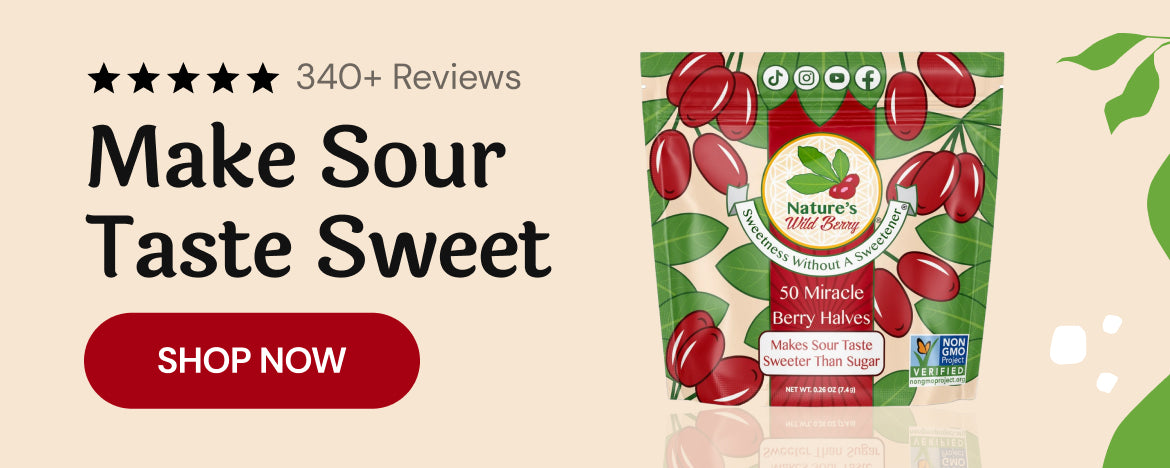
Shop HSA/FSA Medical Food Miracle BerriesMiracle Berries work best when miraculin makes direct contact with the tongue before you eat or drink anything sour. The goal is simple: coat the tongue first, wait briefly, then try acidic foods.
Technique matters more than people think.
A good Miracle Berry used poorly can feel weak.
A good Miracle Berry used well can feel impossible.
Start with a clean tongue. Put the Miracle Berry product directly on your tongue. Move it around so it coats the top, sides, and tip of the tongue. Give it about a minute to build. Then try something sour.
Don't cook with Miracle Berries.
Don't blend them into a smoothie and expect the same effect.
Don't swallow immediately.
Miraculin needs tongue contact. That's the whole game.
Freeze-dried Miracle Berry halves are one of the cleanest ways to experience the fruit because they preserve the original fruit format while removing the seed.
Place the freeze-dried Miracle Berry half on your tongue.
Let it soften.
Move it around your mouth.
Press it against the tongue.
Let the pulp dissolve and coat as much of the tongue as possible.
Most people should start with lemon, lime, grapefruit, pomegranate, or apple cider vinegar in water. Those give a clear first experience.
Fresh Miracle Berries are used similarly, but they contain a seed.
Place the fruit in your mouth.
Gently chew the pulp off the seed.
Move the pulp around your tongue.
Don't bite down hard on the seed.
Keep the pulp in contact with the tongue long enough to coat it.
Fresh Miracle Berries are beautiful, but they're fragile. Once harvested, the fruit can degrade quickly, and the active protein is sensitive to time, heat, and moisture.
Miracle Berry tablets should be placed directly on the tongue and allowed to dissolve.
Don't chew and swallow immediately.
Let the tablet sit on the tongue.
Move it around as it dissolves.
Coat the tongue as evenly as possible.
Depending on the tablet, this can take about one minute or up to five minutes.
Once it's fully dissolved, wait briefly, then try sour foods.
Tablets can be convenient, but formulas vary. Some contain fillers or binders. The effect depends on the amount and quality of miraculin, the manufacturing process, and how well the tablet dissolves on the tongue.
Miracle Berry powder should go directly on the tongue.
Put the powder on your tongue.
Move it around until it's fully dissolved.
Try to coat the tongue evenly.
This usually takes around ten seconds, depending on the powder and amount used.
Then wait briefly and taste sour foods.
The biggest mistake with powder is mixing it into food or drinks first. That dilutes the miraculin and prevents proper tongue coating.
Take the powder first.
Then eat or drink.
Miracle Fruit cubes are designed to dissolve quickly on the tongue.
Place one cube directly on the tongue.
Let it dissolve.
Move it around your mouth so it coats the tongue.
Then wait briefly before tasting sour foods.
Because cubes often require more Miracle Berry material to create the format, they may provide a longer flavor changing effect for some people. Depending on the product, amount, and person, the effect may last roughly thirty minutes to an hour.
As always, the key is direct tongue contact.
Most people should wait about one minute after the Miracle Berry has coated the tongue before tasting the first sour food.
This allows the effect to build.
If you taste too early, the effect may still work, but it may not feel as strong or complete.
Miracle Berries work best with sour, tart, acidic, fermented, vinegar based, and pickled foods.
They don't work well on plain salty foods, plain fatty foods, plain bitter foods, or foods without acidity.
That's why Doritos don't become dessert. But hot sauce on a chip can become fascinating.
Here are some of the best categories.
It already has depth, tannin, tartness, fruitiness, and intensity. After Miracle Berries, that whole structure turns into something absurdly good.
Plain olives are mostly salty and fatty, so they may not change much. Pickled olives are different because the acidity gives miraculin something to work with.
This category can surprise people because the Miracle Berry can soften the sharpness and make certain fermented dairy foods taste richer, sweeter, and more dessert like.
Apple cider vinegar in water can taste shockingly like apple cider. Balsamic can become syrupy and deep.
Lemon vinaigrette can turn a salad into something people actually crave.
Some drinks are better at full strength. Others are better as the effect fades. Wine and champagne can be especially interesting later in the experience.
The Miracle Berry is a kitchen tool, not just a party trick with a lemon wedge.
This is where the fruit becomes more than a novelty. Once you understand that acidity is the trigger, you can start designing meals around it.
Miracle Berries belong in that world because they give you another way to experience food. They let you make sour foods taste sweet without adding sugar. They turn ordinary fruit into dessert. They turn vinegar into a drink people actually talk about. They make healthy foods feel less like discipline and more like discovery.
That doesn't mean Miracle Berries replace sugar everywhere.
They don't.
But they do something sugar can't do.
They make sourness itself become sweet.
That deserves a place in the kitchen.
Ready to try the sour-to-sweet experience yourself?
Shop the Miracle Berry Travel JarFlavor tripping is the playful side of Miracle Berries. It's the experience of eating Miracle Berries first, then tasting different sour, tart, acidic, fermented, and pickled foods to see how dramatically their flavors change.
It's fun because it feels impossible.
It's memorable because everyone reacts differently.
And it's useful because it teaches people how taste actually works.
Flavor tripping is a guided tasting experience built around Miracle Berries.
You eat the berry first.
You let miraculin coat your tongue.
Then you taste foods that normally taste sour, sharp, acidic, or intense.
Lemons taste sweet. Limes become candy. Grapefruit becomes friendlier. Vinegar becomes strange and beautiful. Pomegranate becomes ridiculous. Hot sauce can become sweet heat. Pickled foods become something closer to sweet and sour snacks.
This is why Miracle Berries are sometimes called Magic Berry, Magic Fruit, or Flavor Changing Berry. The words sound dramatic until you watch someone bite a lemon and laugh like reality just slipped.
A good flavor tripping party doesn't need to be complicated.
Start with the berry.
Then start with simple foods.
Then build toward stranger ones.
The best first tray usually includes lemons, limes, grapefruit, strawberries, pomegranate, apple cider vinegar in water, pickles, plain Greek yogurt, hot sauce, and maybe a dry wine or kombucha for adults.
Keep water nearby.
Keep the foods in small portions.
Tell people not to judge everything from the first bite.
The effect has phases, and some foods get better later.
The order matters because intense foods can coat the tongue and muddy the experience. Start bright, then get weird.
Here's a detail almost nobody talks about: the full Miracle Berry effect isn't always the best phase for every food.
Some foods are incredible at peak strength.
Lemons and limes are obvious examples. You want the full force there.
Other foods can become too sweet at peak strength. Dry champagne is the classic example. At full strength, the Miracle Berry can make champagne taste cloyingly sweet. But twenty minutes later, as the effect fades, that same champagne can become beautifully balanced, softer, rounder, and more layered than it tastes naturally.
The fade isn't the end of the experience.
It's another phase of the experience.
At a serious tasting, save certain foods for the back half.
One of the best ways to use Miracle Berries isn't as a random party trick, but as culinary theater.
The food becomes a before and after demonstration, and everyone at the table gets to feel their own senses shift.
That's more memorable than any lecture about taste receptors.
The fun part gets people in the door.
The science keeps them there.
Flavor tripping teaches people that taste isn't fixed. It's a conversation between food, tongue, chemistry, smell, memory, and expectation.
A Miracle Berry doesn't just make a lemon sweet.
It proves your senses are editable.
That's why people remember their first time.
Miracle Berries are fascinating, but they aren't magic in every direction. Understanding what Miracle Berries don't do is just as important as understanding what they do.
This is where a lot of confusion online begins.
The Miracle Berry is powerful because it's specific.
Miracle Berries don't directly stimulate appetite like a drug.
They may make food more enjoyable, and enjoyable food can make someone more willing to eat. That's a real effect, but it's psychological and sensory, not a physical appetite stimulation claim.
The distinction matters.
A food that tastes better can help someone want to eat.
That doesn't mean the fruit is forcing appetite inside the body.
A lemon after Miracle Berries still contains the same amount of sugar it had before.
A lime still has the same calories.
Vinegar doesn't become syrup.
Miracle Berries change taste perception. They don't change the nutrition label.
That's one of the reasons the fruit is so interesting for people trying to enjoy sour foods without adding sugar.
The flavor changing effect is temporary.
For most people, the experience lasts about fifteen to thirty minutes. Some people get a shorter effect.
Some get longer. Product form, technique, storage quality, and individual taste sensitivity all matter.
After the effect fades, taste returns to normal.
There's no permanent change to the tongue.
Miracle Berries work best with direct tongue contact, which is why blending them into food or drinks usually weakens the effect.
If you blend Miracle Berry powder into a smoothie, stir it into yogurt, sprinkle it onto a salad, or mix it into a drink, much of the miraculin may never coat the receptors properly.
Miraculin is a protein, and proteins can be damaged by heat.
That means Miracle Berries shouldn't be baked into cookies, boiled into syrup, simmered into sauce, or cooked into food if you want the taste modifying effect.
You use the berry first.
Then you eat.
Heat is one of the enemies of the protein.
Miracle Berries need acidity.
They work best with sour, tart, acidic, fermented, vinegar based, and pickled foods.
They don't turn plain crackers into cake. They don't turn rice into pudding. They don't make plain potato chips taste like candy. They don't transform every bitter food into dessert.
If there's no acid, there may be very little effect.
This is one of the most important things to understand.
The food itself doesn't change.
That's why Miracle Berries are so fascinating and also why people should still use common sense with acidic foods.
Miracle Berries are food.
They can be part of joyful eating, taste exploration, sugar reduction strategies, culinary experimentation, and certain taste support conversations.
But they shouldn't be described as a treatment or cure.
If a medical condition is involved, bring the clinician into the conversation.
That keeps the fruit in its honest place, which is exactly where it's strongest.
Miracle Berries come from Synsepalum dulcificum, an evergreen shrub or small tree native to tropical West Africa. The fruit is famous because its pulp contains miraculin, the taste modifying glycoprotein that makes sour foods taste sweet. [1] The story of Miracle Berries is part botany, part food history, part traditional knowledge, part modern science, and part missed opportunity. This fruit has been known for centuries in parts of West Africa, but much of the wider world is still just discovering it.
Synsepalum dulcificum is native to West Africa and is associated with regions including Ghana, Togo, Benin, Nigeria, and surrounding areas. Scientific literature describes the plant as part of the tropical West African flora, with broader natural distribution across parts of West and Central Africa. [6] The plant belongs to the Sapotaceae family, a plant family that also includes other fruit producing tropical species. Miracle Berries grow on a slow growing evergreen shrub or small tree. The ripe fruits are red, small, oval to oblong, and usually contain a single seed surrounded by a thin layer of pulp. [1] That thin pulp is the treasure.
It's where miraculin lives.
The accepted scientific name is Synsepalum dulcificum. The species has also appeared historically under older botanical names and synonyms, including names associated with Bumelia, Sideroxylon, Pouteria, Richardella, and Bakeriella. [6] Those older names matter because they show up in historical literature, herbarium records, and older botanical references. They also show how plant classification changes as botanists revise relationships over time.
For the modern reader, the simplest version is this:
Miracle Berry is the common name.
Synsepalum dulcificum is the scientific name.
Miraculin is the active glycoprotein.
Long before Miracle Berries became an internet curiosity, they were part of local food and plant knowledge in West Africa.
Historical and ethnobotanical sources describe people using the fruit to sweeten sour foods and drinks, including fermented foods and beverages. In some regions, different parts of the plant have also been used in traditional practices, including leaves, roots, bark, and branches. [7] This doesn't mean every traditional use is proven by modern clinical research.
It means the plant has cultural history beyond the modern “flavor tripping” trend.
Miracle Berries weren't invented by the internet.
They were discovered by people who lived with the plant.
The Western scientific timeline usually centers on three major reference points.
In 1725, the French explorer Chevalier des Marchais documented the fruit during travels in West Africa, noting its unusual ability to make sour foods taste sweet. [8] In 1852, W. F. Daniell published a Western botanical description and helped place the fruit into formal scientific discussion. [9] In 1968, Kurihara and Beidler isolated and described the taste modifying protein from Miracle Fruit, giving modern science a clearer path toward understanding miraculin. [2] That timeline matters because it shows a long gap between human knowledge and scientific explanation.
People experienced the miracle first. Science later began explaining how it worked.
Recent research has examined Miracle Berry diversity across West African populations, including the Upper Guinea region and the Dahomey Gap. These studies matter because Miracle Berry isn't just a product. It's a living plant with genetic diversity, regional variation, and conservation challenges. [10] One study of phenotypic variation looked at more than 200 accessions and found meaningful variation in tree traits and fruit traits, including fruit size, seed mass, and edible ratio. [10] Another genome wide diversity study found strong population divergence among West African groups and described differences between Upper Guinea and Dahomey Gap populations. It also highlighted the importance of conservation and breeding strategies for the species. [11] In plain English, not all Miracle Berry plants are the same.
Different regions and populations may carry different traits, different fruit performance, and different value for future conservation or cultivation.
That should matter to anyone who cares about the future of this fruit.
The Dahomey Gap is a savanna corridor that separates major forest regions in West Africa. For Miracle Berry research, it matters because populations in and around this region appear to show important patterns of diversity and differentiation. [10] [11] The Upper Guinea forest region also matters because some research suggests strong fruit traits and genetic distinction among accessions from that area. [10] This is where the story becomes bigger than a single berry.
Miracle Berries are part of a landscape.
Climate, forest history, human cultivation, home gardens, farms, regional ecology, and genetic separation all shape what this plant is and what it may become.
Miracle Berries are rare because the plant is slow, the fruit is fragile, and the active protein is delicate.
The plant can take years to produce meaningful fruit.
The ripe berries are small.
The pulp layer is thin.
The fruit can degrade quickly after harvest.
The active glycoprotein is sensitive to time, heat, and moisture.
On top of that, Miracle Berry is still an underdeveloped crop compared with blueberries, strawberries, cranberries, and other commercial berries that have benefited from generations of breeding, supply chains, and consumer familiarity.
Miracle Berries aren't rare because people don't care.
They're rare because the fruit is difficult.
That's part of what makes it special.
Miracle Berries, tablets, powders, cubes, and artificial sweeteners aren't the same thing. They may all sit near the idea of sweetness, but they work differently, feel different, and serve different purposes.
The best choice depends on what someone wants: purity, convenience, speed, storage, price, or the strongest whole fruit experience.
| Form | How It Is Used | Time To Work | Effect Duration | Purity | Drawbacks | Best For |
|---|---|---|---|---|---|---|
| Freeze-Dried Miracle Berry Halves | Chew 1 to 2 halves for about 30 seconds, working the pulp all around your tongue. | Works right away, then keeps building sweeter for about a minute. | About 15 to 30 minutes. | 100% miracle berry. | None, as long as you reseal the package right away. | Anyone who wants to try miracle berry. |
| Freshly Picked or Frozen Miracle Berries | Take one. Work it around your tongue and bite the pulp off the seed, being careful not to chew the seed. Work the pulp around for at least 30 seconds. | Works right away, then keeps building sweeter for about a minute. | About 15 to 30 minutes. | 100% when freshly picked. | Fresh and frozen berries spoil within hours if not used or frozen right away. | People on a miracle berry farm or with their own plant. |
| Miracle Berry Powder | Place about 0.5 grams on your tongue and work it around for about 30 seconds until it dissolves. | Works right away, then keeps building sweeter for about a minute. | About 5 to 30 minutes. | Often cut with anti-caking agents; a few brands are pure. | Dosing is tricky and the powder can spill if not careful. | Saving space; many more servings in a much smaller volume. |
| Miracle Berry Tablets | Let one tablet dissolve fully on your tongue. | About one to five minutes to dissolve. | About 5 to 30 minutes. | Depends on brand; tends to be highly processed. | May contain fillers, binders, or lower fruit content. | Convenience and travel. |
| Miracle Fruit Cubes | Place one cube on your tongue, let it dissolve for 5 to 15 seconds, working it around your tongue. | Works as it dissolves, then keeps building sweeter for about a minute. | About 15 to 30 minutes. | Usually pure, varies by brand. | More expensive, and typically more servings than required. Also very fragile and turns to powder easily. | People who have trouble chewing the berry or measuring powder. |
| Artificial Sweeteners | Added directly to food or drinks. | Immediate. | As long as the sweetened food is eaten. | Varies widely. | Can have aftertaste or digestive issues for some people. | Sweetening food without sugar. |
Artificial sweeteners sweeten the food.
Miracle Berries change how the tongue experiences sourness.
That means artificial sweeteners can work in coffee, cookies, protein shakes, and baked goods. Miracle Berries usually won't help much in those places unless acidity is involved.
But artificial sweeteners can't do what Miracle Berries do to a lemon, lime, vinegar, grapefruit, pomegranate, or sour fermented food.
They're different tools.
A spoon isn't better than a knife. It depends what you're trying to do.
Whole freeze-dried Miracle Berries are often the best choice for people who want the cleanest fruit experience.
The fruit is still recognizable.
The pulp contacts the tongue directly.
There's no need to rely on a compressed tablet format.
The main challenge is preservation. Freeze-dried fruit must be protected from heat, moisture, oxygen, and time. If it's handled poorly, the berry can look fine but perform weakly.
That's one of the strange things about Miracle Berries.
You can't always see potency with your eyes.
Tablets are convenient and familiar. People understand how to use them, they travel well, and they can be easier for first time customers.
The tradeoff is formulation.
Some tablets are excellent. Some aren't. The experience depends on how much active Miracle Berry material is present, how the tablet was made, how it was stored, and what other ingredients are included.
A tablet should dissolve on the tongue, not disappear into the stomach before miraculin has done its job.
Powder can be powerful when used correctly.
It can also be wasted easily.
The mistake is treating Miracle Berry powder like a flavor powder. If someone blends it into a smoothie or sprinkles it onto food, the miraculin may not coat the tongue properly.
Cubes or melts are designed for ease and speed. They can be great for tastings because people understand them instantly.
The tradeoff depends on the formula. Some cubes may include additional ingredients to create the texture, flavor, or structure. They may also use more fruit material, which can lead to a longer effect in some formats.
They're useful when convenience matters.
Artificial sweeteners aren't the enemy.
They're just different.
They're designed to make food or drinks sweet without sugar. Miracle Berries are designed by nature to do something stranger: make sourness taste sweet through taste receptor modulation.
If someone wants to sweeten coffee, use a sweetener.
If someone wants to make lemon taste like lemonade without adding sugar, use Miracle Berries.
Miracle Berries are expensive because they're difficult to grow, fragile to harvest, hard to preserve, and easy to ruin. The part that makes the fruit special is a delicate protein, and delicate proteins don't care about cheap supply chain shortcuts.
That's the real answer.
A Miracle Berry that works and a Miracle Berry that barely works can look almost identical.
The difference is in the handling.
Miracle Berry plants aren't fast crop machines.
The plant can take three to four years before producing meaningful fruit, and it grows best in tropical conditions with warmth, moisture, filtered light, and acidic soil. Sources commonly describe ideal soil as slightly acidic, often around pH 4.5 to 5.8. [1] That means growers need patience before the plant produces value.
For a business, time is cost.
For a farmer, slow fruiting means slow return.
For customers, that shows up in the price.
Miracle Berries aren't big juicy berries like strawberries or grapes.
They're small red fruits with a relatively large seed and a thin layer of active pulp. That pulp is where the miraculin is.
This matters because the valuable part of the fruit isn't huge.
You need a lot of fruit to create meaningful quantities of finished product, especially if you're removing seeds, preserving the pulp, and protecting potency.
A berry can be magical and still be inefficient.
Nature doesn't always optimize for manufacturing.
That's why Miracle Berries can't be treated like ordinary dried fruit. You can't just throw them into a cheap drying process, pack them casually, and expect the same performance.
The protein is the product.
If the protein dies, the magic dies with it.
Proper freeze-drying helps preserve the structure and function of delicate fruit compounds better than harsh heat drying.
For Miracle Berries, that matters because the point isn't just to make the berry shelf stable. The point is to preserve the taste modifying function.
A dried Miracle Berry that no longer changes taste is just expensive red disappointment.
That's why cheap drying can be costly in the end.
Packaging isn't decoration. It's part of keeping the protein alive enough to work.
Once Miracle Berries are dried, they still need protection. Oxygen, moisture, heat, and time can continue working against the protein.
Plastic usually isn't enough for serious long term potency.
Thick Mylar is better.
A hermetically sealed metal tin with a moisture absorber is stronger still because it creates a more protective environment for the fruit.
This is where many people misunderstand the category.
They think packaging is branding.
For Miracle Berries, packaging is preservation.
Nature’s Wild Berry holds a United States patent on Miracle Berry preparation.
That patent exists because the difference between a Miracle Berry that works and one that doesn't isn't always visible to the eye. It's in the preparation, the drying, the handling, and the sealing.
The goal isn't just to make the fruit look pretty.
The goal is to keep it functional.
That's much harder.
Miracle Berries are difficult to mass produce because the plant itself is slow, the fruit is delicate, and preserving miraculin requires care.
Lab production of miraculin has been explored by researchers, but making scalable, affordable, high quality miraculin that behaves like the real fruit remains difficult. [12] That means the market still depends heavily on a challenging agricultural product.
If a product is cheap because the fruit was grown efficiently, preserved carefully, and packed intelligently, beautiful.
But if a Miracle Berry product is cheap because potency was sacrificed, the customer doesn't win.
The customer pays less and gets less magic.
A good Miracle Berry isn't expensive because someone sprinkled luxury dust on it.
It's expensive because keeping miraculin alive long enough to reach your tongue is hard.
Miracle Berries are generally consumed as a food, and the main safety questions are practical: digestion, allergy, medication context, teeth, and reflux. For most healthy adults, responsible use is straightforward.
People with medical conditions, people on medication, or anyone caring for a child should ask a clinician first.
The four main safety pillars are digestion, allergy, medication context, and acidic food exposure.
Miracle Berries themselves aren't the same as eating a bowl of sugar. They don't add sugar to food. They don't permanently alter taste. They don't change the chemistry of what you eat.
But the foods people eat after Miracle Berries can matter.
If someone eats ten lemons because they taste like candy, the tongue may be amused, but the teeth and stomach may have notes.
Miracle Berries are food, and miraculin is a protein.
Like other food proteins, miraculin is expected to be broken down during digestion. Safety assessments and digestibility research have examined miraculin in this context, including work suggesting it's digestible under simulated gastrointestinal conditions. [13] The most realistic digestive issue for many people isn't the berry itself.
It's overdoing acidic foods after the berry.
Too much citrus, vinegar, kombucha, hot sauce, or pickled food can bother the stomach, especially for people who already have digestive sensitivity.
The berry changes taste.
It doesn't make acid disappear.
Any food can theoretically cause an allergic reaction in a sensitive person.
Miracle Berry allergy appears uncommon, but uncommon doesn't mean impossible. Someone with a history of food allergies should be cautious with any new food.
Start small.
Use common sense.
Stop if anything feels wrong.
Seek medical help for symptoms of a serious allergic reaction.
That's not fear. That's just intelligent eating.
One specific note from the regulatory record: when European authorities assessed the dried fruit, their analysis identified a potential cross-reactivity with peanut allergens, along with sequence similarity to a soy protein. [14] The practical takeaway is simple. If you have a peanut or soy allergy, treat Miracle Berries with extra caution and talk to a clinician before trying them.
There's no credible reason to claim that Miracle Berries broadly interact with medications like a drug.
Miracle Berries aren't blood thinners. They aren't diabetes medication. They aren't chemotherapy. They aren't a pharmaceutical treatment.
Still, people taking medication should be thoughtful for two reasons.
First, people on medication may have medical conditions that deserve clinician guidance.
Second, Miracle Berries may change the taste of foods or medicines, and that can affect how someone experiences them.
The safe language is simple:
If you have a medical condition, take medication, or care for a child, ask a clinician first.
Miracle Berries can make acidic foods taste sweet, but the acid is still there.
That matters for teeth.
Lemons, limes, vinegar, sour candies, kombucha, and acidic drinks can expose teeth to acid. Miracle Berries may make those foods easier to consume, which means some people may eat more acid than usual.
Don't use the sweet taste as permission to abuse your enamel.
Use water.
Don't brush immediately after heavy acid exposure.
Give your mouth time.
Enjoy the experience without turning it into a citrus endurance contest.
If acidic foods trigger reflux, Miracle Berries don't magically remove that risk.
A lime that tastes sweet can still be acidic.
Apple cider vinegar that tastes like cider can still be vinegar.
Hot sauce that tastes sweet can still be hot sauce.
People with reflux, ulcers, sensitive stomachs, or medical dietary restrictions should choose foods carefully and ask a clinician if needed.
The Miracle Berry changes taste perception.
It doesn't rewrite digestive reality.
Miracle Berries are gentle in the sense that they're food and the effect is temporary.
But the experience can make sour foods taste so good that people forget the sour foods are still sour.
There's a gut related study people sometimes bring up when discussing miraculin safety. It deserves a fair explanation because the headline can sound scarier than the actual context.
The short version is this: the study didn't test the whole real miraculin protein as people consume it in Miracle Berries. It used a small synthetic fragment and a cell model. That can be useful for scientific questions, but it isn't the same as eating the fruit.
The study examined a short peptide fragment related to miraculin and looked at effects in a cell model.
That's not automatically bad science.
Cell models can be useful.
Fragments can be useful.
Early mechanistic work can be useful.
The problem begins when people leap from “a concentrated fragment affected cells in a dish” to “eating Miracle Berries harms the gut.”
That leap is too big.
The miraculin protein is 191 amino acids long. This study used a synthetic fragment of just 20 of them.
Drawing conclusions about the whole protein from that fragment is like reading the first sentence of a novel and publishing a review of the entire book.
The fragment doesn't have the full structure.
It doesn't have the same glycosylation.
It doesn't have the same folding.
It doesn't have the same function as the whole protein in the fruit.
It's related to the story, but it isn't the full story.
There's another issue: what happens in a dish isn't automatically what happens in a human body.
Imagine saying cotton candy would damage the bottom of the ocean if you could somehow drag it down there unprotected and keep it intact. The problem is that cotton candy wouldn't survive that journey as cotton candy.
Miraculin is delicate too.
When people eat Miracle Berries, the protein is exposed to saliva, swallowing, stomach acid, enzymes, and digestion. A concentrated synthetic fragment placed directly onto cells in a dish isn't the same situation.
It may tell scientists something.
It doesn't recreate normal eating.
The cells used in many gut model studies are Caco-2 cells, which are human intestinal cancer cells grown in a flat layer in laboratory conditions.
They're useful for research.
They aren't the same as a living human digestive system.
Cells in a dish are already in an artificial context. If you pour concentrated substances onto them, you may observe stress responses. That doesn't automatically prove the same thing happens when a person eats a real food in normal amounts.
Context is the difference between information and panic.
Human research involving Miracle Fruit and taste support hasn't suggested the kind of dramatic gut danger someone might imagine from an overread headline. Clinical and safety discussions should still be careful, but the real world context matters. [5] [13] People have eaten Miracle Berries for a long time.
The fruit has been used in tasting settings, culinary settings, and research settings.
That doesn't mean every question is closed forever.
It means one fragment study shouldn't be treated like the final word on the whole fruit.
The gut study is worth knowing about.
It isn't worth sensationalizing.
A synthetic fragment isn't the whole protein.
A cell dish isn't a human body.
A stress response in a model isn't the same as harm from eating Miracle Berries.
The fair position is this: keep studying miraculin, cite the research honestly, and don't pretend a small fragment tells the entire story of a whole fruit.
That isn't defensive.
That's accurate.
Miracle Berries are legal in many places, but regulatory status can vary by country and by product form. The safest answer is that customers should check the laws and import rules where they live.
In the United States, Miracle Berry products are sold as food products, but specific regulatory categories can depend on ingredient, form, use, and claims.
Miracle Berries can be sold in the United States, but companies must still follow food labeling, safety, and claim rules.
The key point is that selling a Miracle Berry food product is not the same as making medical claims.
A company can discuss taste modification.
A company can discuss how sour foods may taste sweet.
A company should not claim the product treats diabetes, cures cancer, prevents disease, or replaces medical care.
That is not just cautious wording.
That is the line between food and drug claims.
Europe has addressed miraculin and dried Miracle Berry preparations through the novel food framework.
The European Food Safety Authority has evaluated dried fruits of Synsepalum dulcificum as a novel food and issued scientific opinions related to safety under specified conditions of use. [14] That does not mean every product in every form can be sold anywhere without rules.
It means regulatory authorities have reviewed the ingredient in a formal framework.
Anyone selling in Europe still needs to pay attention to authorized uses, specifications, labeling, and local rules.
Food laws aren't identical everywhere.
One country may treat a product as a normal food.
Another may treat it as a novel food.
Another may have import restrictions.
Another may care more about the claims made than the fruit itself.
Product form also matters.
Fresh fruit, freeze-dried fruit, powder, tablets, cubes, extracts, and medical food positioning can all raise different questions.
That's why “is it legal?” is a simple question with a careful answer.
If you're buying Miracle Berries inside your own country from a legitimate seller, the seller should be responsible for following local rules.
If you're importing Miracle Berries across borders, check your country’s import laws.
If you're using Miracle Berries for medical taste support, ask a clinician.
And if a company is making wild disease claims, be careful.
The fruit is amazing.
It doesn't need illegal promises.
Looking for shipping, returns, or order help? Visit our customer FAQ.
Miracle Berries are small red West African fruits that make sour foods taste sweet. They contain miraculin, a natural glycoprotein that coats sweet taste receptors on the tongue and activates when acid arrives. The food doesn't change. Your taste perception changes.
Miracle Fruit is another common name for Miracle Berry. Both names usually refer to Synsepalum dulcificum, the West African fruit that contains miraculin. People also call it Magic Berry, Magic Fruit, or Flavor Changing Berry because of the way it changes sour taste.
Miracle Berries work because miraculin coats sweet taste receptors on the tongue. When acidic food enters the mouth, the receptor environment changes and sweetness signaling is activated. Sour foods can then taste sweet without sugar being added to the food.
Miraculin is the natural taste modifying glycoprotein found in Miracle Berry pulp. It doesn't taste intensely sweet by itself. Instead, it changes how sweet taste receptors respond under acidic conditions, which is why lemons, limes, vinegar, and other sour foods can taste sweet.
For most people, the flavor changing effect lasts about fifteen to thirty minutes. Some people experience less, while strong tasters can feel the effect for several hours. When Juliano first started working with Miracle Berries, the effect lasted close to five hours for him.
Miracle Berries can begin working quickly once miraculin coats the tongue, but the effect often builds during the first minute. For many people, waiting about one minute before tasting sour foods gives a stronger and more complete experience.
Miracle Berries work for most people, but not everyone experiences the effect equally. A small minority of people may feel little or no effect, likely because of natural differences in taste receptor response, technique, timing, or product potency.
Miracle Berries have a mild fruit taste before the full effect begins. They're slightly tart, slightly fruity, and not extremely sweet on their own. As you chew, the berry’s own acidity can begin activating miraculin, making the fruit taste sweeter.
Miracle Berries contain natural components like any fruit, but their famous effect doesn't come from adding sugar to food. The sweetness effect comes from miraculin changing how your tongue reads sourness. A lemon still has the same sugar content after the berry.
No. Miracle Berries don't chemically change the food. A lemon remains acidic. Vinegar remains vinegar.
Grapefruit remains grapefruit. The change happens on your tongue, where miraculin alters how sweet taste receptors respond when acidic foods are eaten.
Miracle Berries work best with sour, tart, acidic, fermented, vinegar based, and pickled foods. Lemons, limes, grapefruit, pomegranate, strawberries, kiwi, apple cider vinegar, kombucha, Greek yogurt, vinaigrettes, and hot sauces are all popular choices.
Miracle Berries are generally consumed as food, and the effect is temporary. The bigger practical caution is overdoing acidic foods because they may still affect teeth, reflux, or digestion. People with medical conditions, people on medication, or anyone caring for a child should ask a clinician first.
Miracle Berries are legal in many places, including the United States when sold under appropriate food rules. Legal status can vary by country, product form, import rules, and claims made by the seller.
Customers should check local rules when importing.
Miracle Berries may help some people with chemotherapy related taste changes by improving taste perception or making certain foods more enjoyable. They do not treat cancer and should not be described as cancer therapy. The responsible framing is taste support and quality of life.
Miracle Berries do not treat diabetes or replace medical care. They may help some people enjoy sour, tart, fermented, or low sugar foods without adding sugar. People managing diabetes should still follow medical guidance and consider total carbohydrates and glucose response. Important: because Miracle Berries make sour and acidic foods taste sweet, don't treat that sweetness as a sign the food is sugar free or carb free.
The food's actual sugar and carbohydrate content doesn't change.
Miracle Berries don't burn fat or cause weight loss. They may help some people enjoy healthier foods like salads, tart fruits, vinegar dressings, yogurt, or unsweetened drinks. That can support better eating habits, but the fruit itself isn't a weight loss treatment.
Miracle Berries may help with some bad tasting medicines, especially sour or acidic ones, by changing taste perception. They shouldn't be mixed into medication unless a clinician or pharmacist approves. For children or prescriptions, ask a medical professional first.
Some tablets work well, but quality varies. Whole freeze-dried Miracle Berries are closer to the original fruit experience, while tablets are more processed and may contain binders or fillers. The best choice depends on potency, ingredients, storage, and convenience.
Miracle Berries are expensive because the plant is slow to fruit, the berries are small and fragile, and miraculin is sensitive to heat, moisture, and time. Proper freeze-drying and protective packaging are needed to preserve the effect.
No. Miracle Berries shouldn't be cooked if you want the flavor changing effect. Miraculin is a protein, and heat can damage proteins. Use Miracle Berries first, let miraculin coat the tongue, then eat or drink acidic foods afterward.
Already hooked? Stock up at the best per-serving value.
Shop the 50-Serving Refill BagJuliano is the founder of Nature’s Wild Berry, holder of a US patent on Miracle Berry preparation, and one of America’s leading Miracle Berry experts. He has spent 14 years working with Miracle Berries, Miracle Fruit, and miraculin, helping introduce this fruit to customers, educators, chefs, healthcare adjacent communities, and curious eaters through well over 100,000 taste tests.
His work focuses on preserving the real function of the Miracle Berry, teaching people how the fruit actually works, and helping the world understand why this small West African berry is much more than a party trick.


